Choosing the right lighting can significantly impact the ambiance of a space. The decision between warm white and cool white lighting might seem trivial, but it affects mood and functionality. As lighting expert Dr. Emily Santos notes, “The difference in color temperature alters perception and emotional response.” This underscores the importance of understanding what is the difference between warm white and cool white.
Warm white light typically emits a yellowish hue, creating a cozy environment. It's perfect for living rooms and bedrooms, adding comfort. Conversely, cool white light gives off a bluish tone, enhancing work areas and kitchens. It promotes alertness and focus, making spaces feel more lively.
While both options have their merits, they also bring challenges. Lighting choices can sometimes lead to unintended effects, such as creating a harsh atmosphere with cool whites. Reflecting on your needs is key. Consider how each type of lighting will affect your daily activities and overall well-being. The choice is not merely practical; it’s personal.
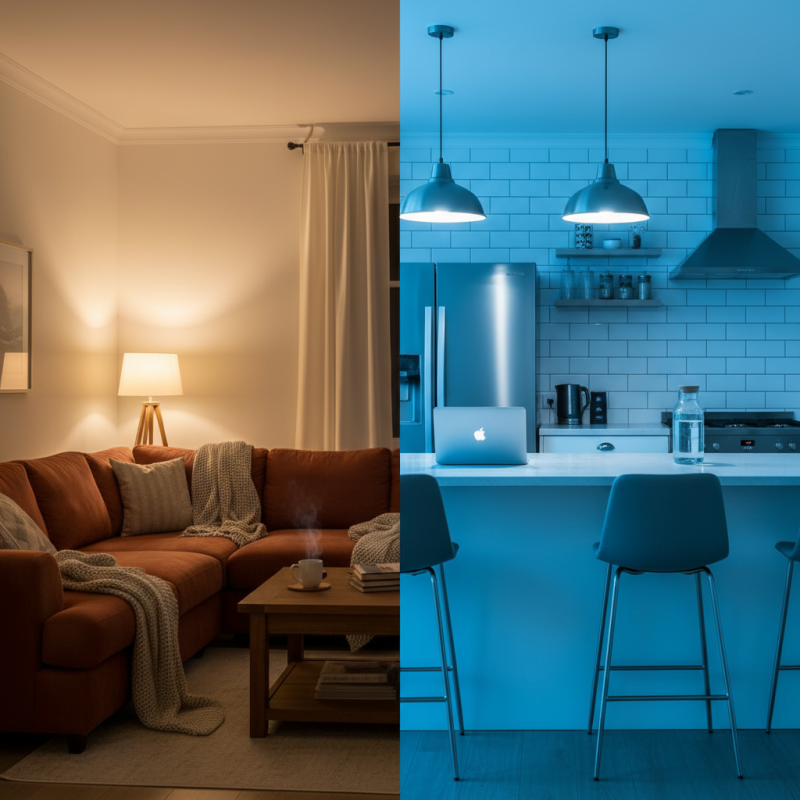
Understanding the Color Temperature Scale: Warm vs. Cool White Lighting
Choosing between warm white and cool white lighting can be challenging. Understanding color temperature is key. Color temperature, measured in Kelvin (K), defines how "warm" or "cool" a light appears.
Warm whites, around 2700K to 3000K, create a cozy and inviting atmosphere. They are great for living rooms and bedrooms. These lights mimic traditional incandescent bulbs, adding a sense of comfort.
On the other hand, cool whites usually range from 4000K to 5000K. They provide a brighter, more energetic feel. Cool white lighting is often used in kitchens and offices. It enhances focus and productivity, but it may feel harsh in some spaces. It's important to consider the mood you want to create.
Reflecting on your experience can help refine your choice. Sometimes, warm white may seem too dim for specific tasks, while cool white can feel sterile. Experimenting with both types can reveal unexpected preferences. Try different bulbs in your space and observe how they change the atmosphere.
Key Differences Between Warm White (2700K-3000K) and Cool White (4000K-5000K)
When choosing between warm white and cool white lighting, understanding the key differences is essential. Warm white lighting, typically ranging from 2700K to 3000K, creates a cozy, inviting atmosphere. This type of lighting resembles the soft glow of traditional incandescent bulbs. It's often preferred in homes, particularly in living rooms and bedrooms. The warmth can foster relaxation and connection, making it ideal for personal spaces.
On the other hand, cool white lighting spans from 4000K to 5000K. This lighting mimics daylight, offering a bright and energizing effect. It is frequently used in workspaces, kitchens, or garages. Cool white can enhance focus and productivity, which is valuable in a bustling environment. However, some may find it too harsh for a warm, inviting setting.
Choosing between the two requires careful thought. Consider where you plan to use the lighting. Warm white may seem perfect for intimate settings, but it might not provide the clarity needed for detailed tasks. Conversely, while cool white is energizing, it may lack the comfort that warm spaces desire. Balancing these considerations can lead to a more harmonious atmosphere in your environment.
2026 How to Choose Between Warm White and Cool White Lighting? - Key Differences Between Warm White (2700K-3000K) and Cool White (4000K-5000K)
| Attribute |
Warm White (2700K-3000K) |
Cool White (4000K-5000K) |
| Color Temperature (Kelvin) |
2700K - 3000K |
4000K - 5000K |
| Color Appearance |
Yellowish/Soft Light |
White/Neutral Light |
| Typical Use Cases |
Bedrooms, Living Rooms, Restaurants |
Kitchens, Offices, Retail Spaces |
| Mood Setting |
Cozy and Inviting |
Bright and Energetic |
| Visual Clarity |
Less Detail in Colors |
Enhanced Detail in Colors |
| Impact on Space |
Makes Space Feel Warmer |
Makes Space Feel Larger |
Impact of Color Temperature on Mood and Ambiance in Interior Spaces
Lighting is more than just a necessity; it significantly impacts mood and ambiance in interior spaces.
Warm white lighting, with its yellowish hue, can create a cozy and inviting atmosphere.
This type of light is ideal for living rooms and bedrooms, where comfort is key.
On the other hand, cool white lighting emits a bluish tone, offering a more energetic and alert ambiance.
It works well in kitchens and offices where focus is important.
When selecting between warm and cool white lighting, consider the purpose of the space.
A playful nook for relaxation would benefit from soft, warm light.
However, for areas requiring concentration, cool light may be more appropriate.
This balance is crucial for spaces shared by different activities.
Tips: Always evaluate how a light color makes you feel.
Use color samples to see how they change throughout the day.
Remember, it’s not only about aesthetics but also about how a space makes you feel—comfort or alertness?
Light can transform a room's character, so take your time when choosing. It’s a learning process.
Optimal Use Cases for Warm White and Cool White Lighting in Various Settings
Choosing between warm white and cool white lighting can significantly impact your space.
Warm white lighting, with its yellowish hue,
creates a cozy atmosphere that is perfect for living rooms or bedrooms. It fosters relaxation and comfort. Consider this lighting for
intimate gatherings or personal spaces. It brings an inviting warmth, enhancing wood textures and soft colors.
On the other hand, cool white lighting features a bluish tone that promotes
alertness and focus. This type is ideal for workspaces, kitchens, or bathrooms. The crisp illumination enhances clarity and precision.
However, it may feel harsh in a bedroom setting. Keep in mind that the psychological effects of these color temperatures can vary
depending on personal preference.
Lighting should not only serve a purpose but also reflect your individual style.
Evaluate how each type affects your mood and productivity. Experimenting with different settings can help you find the perfect balance.
Never underestimate the transformative power of light in your environment.
Finding the right lighting can be a continuous journey of discovery and adjustment.
Expert Recommendations: How to Choose the Right Lighting for Your Needs
Choosing lighting for your space can be challenging. Warm white lighting creates a cozy, inviting atmosphere. It is perfect for living rooms and bedrooms. The soft glow enhances relaxation and comfort. Consider using it in spaces where you unwind. Cool white lighting, on the other hand, offers a crisp, modern feel. It is ideal for kitchens and workspaces. This lighting enhances clarity and productivity.
Experts suggest assessing your needs before deciding. Think about the activities that will take place in each area. If you often read or work, cool white might serve you better. However, for intimate gatherings, warm white can be more effective.
Lighting can affect mood and energy levels. Test different bulbs in your space. Observe how each color impacts your daily routine. Some may find warm white too dim for focused tasks. Others might feel cool white is too harsh for relaxation. Reflection on how you feel with each type is essential. Adjust your selections based on personal response.
2026 How to Choose Between Warm White and Cool White Lighting?
This bar chart illustrates the average user preference for different types of white lighting as of 2026. Warm white lighting (2700K) is the most preferred choice, making up 65% of user preferences, while cool white lighting (5000K) is the least popular at 15%. Neutral white (4000K) falls in between.
FAQS
: Lighting color significantly affects mood and ambiance. Warm white creates coziness, while cool white promotes alertness.
Warm white lighting is ideal for living rooms and bedrooms. It enhances relaxation and creates an inviting atmosphere.
Use cool white lighting in workspaces and kitchens. Its crisp illumination helps with focus and productivity.
Assess the activities in the space. Consider warm white for relaxation and cool white for tasks requiring concentration.
Experiment with different bulbs. Observe how each type affects your mood and comfort throughout the day.
Yes, individual preferences matter. Some may find warm white too dim, while others might find cool white too harsh for relaxation.
Conclusion
When deciding between warm white and cool white lighting, understanding the color temperature scale is essential. Warm white lighting, typically ranging from 2700K to 3000K, emits a soft, inviting glow, ideal for creating cozy atmospheres in living areas and bedrooms. In contrast, cool white lighting, between 4000K and 5000K, produces a bright, clear illumination that is better suited for workspaces and kitchens where focus and alertness are key.
What is the difference between warm white and cool white? The key differences lie not only in their color temperatures but also in their psychological impact and optimal use cases. Warm white enhances comfort and relaxation, making it perfect for social areas, while cool white promotes efficiency and concentration, suitable for professional settings. By assessing your specific needs and the desired ambiance, you can choose the right lighting that aligns with your goals.

 PureRay Light