Choosing among China’s top 10 floor lamps requires more than comparing finishes, wattage, and price. The real question is how to position floor lamps for task lighting without creating glare, shadows, or visual fatigue. A reading lamp beside an armchair should stand slightly behind the user’s shoulder. Its shade should direct light toward the book, not directly into the eyes. A desk lamp needs a similar principle, but a taller floor lamp may work better beside compact workstations.
The International Energy Agency reports that lighting accounts for roughly 15% of global electricity consumption. The U.S. Department of Energy also states that LED bulbs use at least 75% less energy than incandescent bulbs. These figures support efficient LED floor lamps, but efficiency alone does not guarantee comfort. Color temperature, beam angle, dimming, and shade opacity matter greatly. Around 3000K often feels comfortable for reading, while 4000K may support detailed desk work. Individual sensitivity still varies.
Lighting designer Randall Whitehead emphasizes, “The best lighting is the lighting you don’t notice.” This principle fits task lighting perfectly. Place the lamp close enough to illuminate the working area, but far enough to avoid harsh reflections on glossy pages or screens. Test it at night. Move it ten centimeters. Notice the difference. A neat diagram cannot solve every room, and that is where many guides become too confident. The following China-focused selection examines lamp height, arm flexibility, base stability, and real positioning examples for practical daily use.
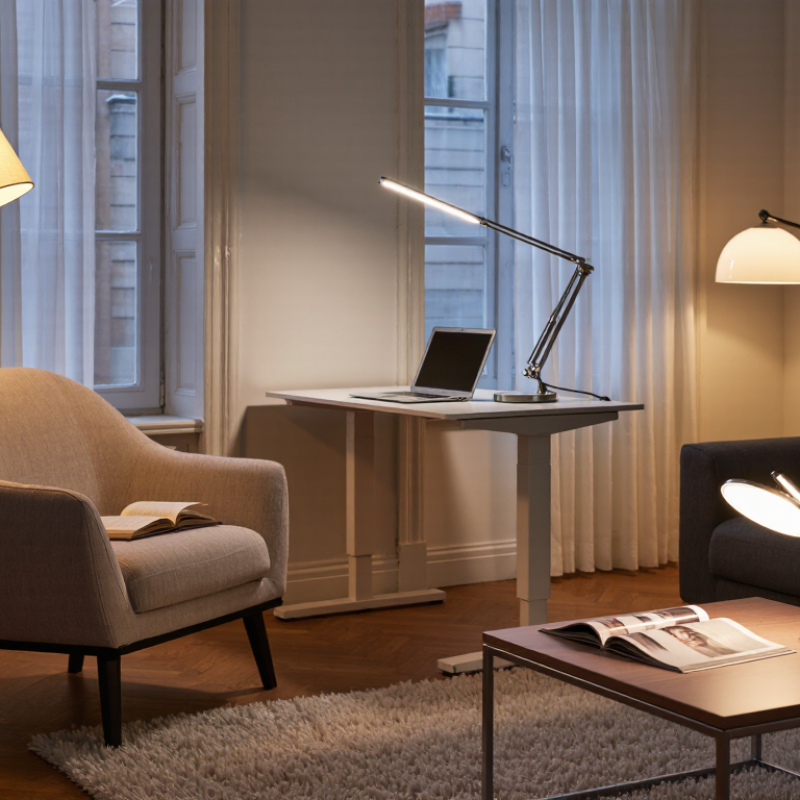
A well-positioned floor lamp can make reading, sewing, or desk work easier on the eyes. Its effectiveness depends on controlled light, not simply higher brightness. The lamp should stand beside or slightly behind the user’s shoulder. This position reduces shadows across the page or work surface. An adjustable arm helps direct light toward the task without shining into the eyes.
The lampshade matters as much as the bulb. A shade that hides the bare bulb can reduce glare, especially in rooms with glossy tables or pale walls. For reading, place the light source around 40–60 centimeters from the chair, then adjust it to illuminate the page evenly. A color temperature between 2700K and 3500K often feels comfortable indoors. A high color-rendering rating also helps fabrics, drawings, and printed details appear more naturally.
Stability is essential. A wide base prevents accidental tipping near sofas, children, or busy walkways. I have found that a beautiful lamp can still fail when its switch is difficult to reach. Small details matter. Light should support the task, not compete with it. In one room, I once placed the lamp too close to a white wall, creating a harsh reflected patch. Moving it only 20 centimeters solved much of the problem. The result was better, though not perfect. Every room has different surfaces, seating heights, and personal sensitivity to glare. Testing the lamp from the user’s actual chair remains the most reliable adjustment.
Choosing among China’s top 10 floor lamps should begin with the activity, not the appearance. For reading, place the lamp beside your chair, slightly behind your shoulder. Its shade should sit near eye level, while the beam reaches the page without shining into your eyes. The IES Lighting Handbook commonly recommends about 300–500 lux for reading and detailed tasks. A dimmable lamp helps when daylight changes.
Different activities need different light. Use a focused, adjustable head for writing, sewing, or model building. Aim it across the work surface, not directly at glossy paper. For relaxing, choose a shaded lamp with softer, indirect light. In a living room, the light should support conversation without creating bright patches on the wall. For artwork or color matching, look for a high color rendering index, preferably CRI 90 or above.
Energy use also matters. The U.S. Department of Energy states that LED lighting uses at least 75% less energy and lasts up to 25 times longer than incandescent lighting. Check the lamp’s lumen output, color temperature, dimming range, and stability before buying. Warm 2700–3000K light suits evenings; 3500–4000K often feels clearer for work. I still place lamps too close sometimes. It looks neat, but glare quickly becomes tiring. Measure the chair, table, and shade height first. Small adjustments can change comfort more than a higher price.
Where to Position a Floor Lamp for Focused Illumination
Position a floor lamp beside the reading chair, not directly behind your head. Place the shade slightly above eye level. Aim the light toward the book, keyboard, or craft surface. This reduces shadows from your hands and shoulders. Keep the lamp about 30–45 centimeters from the task area.
The IES Lighting Handbook identifies 300–500 lux as a practical range for many reading and detailed indoor tasks. EN 12464-1:2021 specifies 500 lux for several reading and writing environments. These figures are useful references, not rigid home rules. A dim room may need more output. A pale desk may need less.
Use an adjustable head when the floor lamp serves different activities. Angle the beam across the page rather than into your eyes. Avoid placing the lamp beside a glossy screen. Reflected glare becomes tiring quickly. In a left-handed setup, test the lamp on the right side, then reverse it for right-handed work. I sometimes position lamps too close at first. The bright pool looks efficient, but it can create harsh contrast. Step back, check the page, and adjust the height by a few centimeters. A comfortable task light should make details clearer without becoming the main visual distraction.
| No. | Floor Lamp Configuration | Best Task Application | Recommended Position | Typical Lamp Height | Distance from Task | Beam Direction | Recommended Task Illuminance | Positioning Guidance | Practical Notes |
|---|---|---|---|---|---|---|---|---|---|
| 1 | Adjustable Reading Floor Lamp | Reading in an armchair | Place just behind and to the side of the reader’s dominant hand. | 120–150 cm | 35–60 cm from the book | 30°–45° downward | 300–500 lux | Keep the shade slightly above eye level and aim the light at the page rather than directly at the face. | Positioning the lamp on the opposite side can reduce shadows from the writing or turning hand. |
| 2 | Arc Floor Lamp | Sofa reading or laptop work | Set the base behind or beside the sofa so the curved arm reaches over the work area. | 170–220 cm | 60–90 cm from the task | 45°–60° downward | 300–500 lux | Center the shade over the reading zone while keeping the base outside the main walking path. | Use a stable, weighted base and check ceiling clearance before installation. |
| 3 | Swing-Arm Floor Lamp | Writing, drawing, or sewing | Place beside the desk or chair, with the arm pivot aligned with the rear edge of the work surface. | 130–180 cm | 40–75 cm from the surface | 35°–50° downward | 500–750 lux | Adjust the arm so the light comes from the side opposite the writing hand to limit hand shadows. | A diffused shade helps reduce glare on glossy paper and drawing materials. |
| 4 | Torchiere with Reading Light | General room lighting plus reading | Place near the seating area, with the dedicated reading head aimed toward the user’s shoulder. | 150–185 cm | 45–70 cm from the book | 30°–45° downward | 300–500 lux | Use the upward light for ambient brightness and the separate adjustable head for focused illumination. | Separate controls are useful when ambient light and task light need different brightness levels. |
| 5 | Bendable Neck Floor Lamp | Crafting and model making | Place beside the worktable and bend the neck over the active work area. | 110–160 cm | 30–50 cm from the work | 45°–60° downward | 500–1,000 lux | Keep the light close enough for detail work but outside the reach of tools, materials, and moving hands. | Choose a broad, diffused beam to avoid harsh shadows on small objects. |
| 6 | Slim Profile Task Lamp | Home-office desk work | Place beside the desk rather than directly behind the monitor. | 120–160 cm | 50–80 cm from the keyboard | 20°–35° downward | 300–500 lux | Align the beam across the desktop and keep it out of the monitor’s direct reflection path. | Balanced room lighting can reduce contrast between the bright screen and surrounding surfaces. |
| 7 | Tripod Floor Lamp with Task Shade | Occasional reading and writing | Place beside the chair or small table, leaving clear space around the three-leg base. | 130–175 cm | 50–75 cm from the task | 30°–45° downward | 300–500 lux | Turn the shade toward the activity and avoid placing one leg where it can obstruct feet or chair movement. | Fabric shades provide softer light but may require a higher-output LED for detailed tasks. |
| 8 | Multi-Head Floor Lamp | Shared table or hobby area | Place at the end or corner of the table and direct separate heads toward different work zones. | 145–190 cm | 60–100 cm from each zone | 30°–50° downward | 300–750 lux | Distribute the heads evenly to prevent one person or section of the table from receiving most of the light. | Multiple lower-power sources can provide more uniform coverage than one narrow beam. |
| 9 | Uplight with Directional Spotlight | Reading with soft ambient lighting | Set behind the seating area and aim the directional head toward the reading surface. | 150–185 cm | 50–80 cm from the task | 25°–40° downward | 300–500 lux | Use the uplight to brighten the room indirectly while keeping the spotlight focused on the book or tablet. | Avoid aiming the spotlight toward reflective screens or polished tabletops. |
| 10 | Magnifying Task Floor Lamp | Fine craft, repair, and inspection | Place directly beside the work area, allowing the magnifier and light head to move over the object. | 100–150 cm | 15–35 cm from the object | 45°–70° downward | 750–1,000 lux | Center the lens above the object and adjust the lamp to prevent the user’s head from blocking the light. | Use a color-rendering index of 80 or higher for accurate material and color inspection. |
Reference guidance: Illuminance ranges are practical recommendations for common residential task activities. Actual results depend on lamp output, beam spread, shade transmission, room reflectance, and the user’s visual needs. Always check the measured light level at the task surface and keep the lamp stable and clear of walkways.
China Top 10 Floor Lamps: How to Position for Task Lighting?
Positioning matters more than appearance when a floor lamp supports reading, writing, or detailed work. Set the shade slightly above eye level, then aim the beam toward the task surface. This reduces direct glare and keeps the light from shining into your eyes. For reading, place the lamp 40 to 60 centimeters beside the chair. Keep it on the opposite side of your writing hand when possible. This helps prevent your hand from casting a dark shadow.
Adjust the height until the brightest area covers the page without spilling across the entire room. A flexible lamp may need a lower setting for drawing and a higher setting for reading. Tilt the shade about 30 to 45 degrees toward the desk or book. Avoid pointing it straight down, because concentrated light can create harsh reflections. A 300 to 500 lux range usually supports comfortable close work, although room color and personal eyesight change the result.
My first setup was too low, and the shade blocked part of the page. I also aimed the light too sharply, which made glossy paper uncomfortable. Small errors are normal. Move the lamp while seated, not while standing. Check the page, screen, and nearby wall from your actual working position. If one side of the desk stays dim, rotate the base slightly instead of increasing brightness. Test it at night. Daylight can hide poor positioning.
Recommended task illuminance varies by activity. Adjust the lamp head so the light falls from the side or slightly behind the working shoulder, avoiding direct glare and hard shadows.
Values show typical target illuminance for comfortable task lighting. Use the tooltip to review the suggested lamp-head height, aiming angle, and light direction. Actual requirements may vary with room surfaces, eyesight, shade design, and local lighting standards.
When positioning one of the top ten floor lamps for task lighting, aim for 300–500 lux on the work surface. This range is widely used for reading and detailed indoor tasks in EN 12464-1. Place the lamp beside your non-dominant hand, about 30–45 centimeters from the desk edge. The shade should sit slightly above eye level. This directs light downward without shining into your eyes. IES Lighting Handbook guidance also supports layered lighting, rather than relying on one bright source.
Glare and shadow control Glare often appears when a bare bulb faces a polished table or screen. Choose a diffused shade and keep the visible light source outside your normal viewing angle. CIE 117:1995 identifies unified glare rating as a key measure; office-like tasks commonly target UGR below 19. Shadows need attention too. A lamp directly behind your writing hand can cover the page with a dark arm shadow. Move it sideways and test the page at several angles. Uneven lighting remains easy to miss. Use a light meter, if possible, and compare the brightest and darkest areas. I still misjudge this by eye. A pale wall behind the lamp can soften contrast, but excessive reflected light may create screen glare. Test for ten minutes before fixing the final position.
Place it beside the chair, slightly behind your shoulder. Keep the shade near eye level. Aim light toward the page.
Keep it about 30–60 centimeters from the chair or task surface. Adjust the distance while seated. The correct position may feel slightly uneven.
Around 300–500 lux usually works well. Writing areas may need about 500 lux. Pale surfaces can require less light.
Choose an adjustable head and dimming control. A flexible arm helps with reading, sewing, drawing, and model building.
Aim the beam across the surface, not directly downward. Keep the lamp away from glossy screens. Reflections become tiring quickly.
Place it opposite your writing hand when possible. Right-handed users can try the left side. Reverse this for left-handed work.
Warm 2700–3000K light suits evening relaxation. Clearer 3500–4000K light often supports work. Personal comfort still matters.
Set the shade slightly above eye level. Tilt it roughly 30–45 degrees toward the book or desk. Move it while seated.
The bright area may be too narrow or too harsh. Step back slightly and rotate the base. I sometimes increase brightness too soon.
Check the page, screen, and nearby wall at night. Look for shadows and bright patches. Daylight can hide poor placement.
Choosing the right floor lamp can transform ordinary room lighting into comfortable, effective task lighting. This guide explains how to position floor lamps for task lighting in areas used for reading, writing, crafting, studying, or detailed work. It covers the features that make a lamp useful, including a stable base, adjustable height, flexible shade, suitable brightness, and a light source that supports clear vision without creating discomfort. It also shows how to match different lamp styles and light levels to specific activities.
Proper placement is equally important. Position the lamp beside or slightly behind the user to illuminate the work surface without shining directly into the eyes. Adjust the height and angle so light falls evenly on the task, while avoiding harsh glare, distracting shadows, and dark spots. By directing light carefully and considering furniture layout, wall reflections, and the user’s dominant hand, a floor lamp can provide focused, balanced illumination and improve both comfort and productivity.

PureRay Light